Okay, so we had another week span where nothing was posted. Sorry, it’s been awfully busy over here so hopefully you can forgive me and accept the apology.
Wednesday, November 11, 2009
Shift Happens


Wednesday, November 4, 2009
Walken All Over Lady Gaga
Is there a cooler person out there than Christopher Walken? I sincerely doubt it. In fact, I dare you to find anyone more revered in any field than this amazing man. In both the areas of dramatic acting and comedy entertainment, Walken has managed to become a near cult figure in American society. He’s an icon.
Perhaps his most enthralling characteristic is his unique mannerism of talking. You could say that he’s essentially made his entire career off of it. Whether it’s natural or forced, I frankly could care less – as long as he keeps doing it, I’ll watch him do anything.
His latest appearance on the BBC chat show Friday Night with Jonathan Ross typifies the mystery and charm of Christopher Walken and the style in which he speaks. This video is his rendition of Lady Gaga’s highly suggestive “Poker Face” and the most recent addition to the Walken archive of priceless moments.
Perhaps his most enthralling characteristic is his unique mannerism of talking. You could say that he’s essentially made his entire career off of it. Whether it’s natural or forced, I frankly could care less – as long as he keeps doing it, I’ll watch him do anything.
His latest appearance on the BBC chat show Friday Night with Jonathan Ross typifies the mystery and charm of Christopher Walken and the style in which he speaks. This video is his rendition of Lady Gaga’s highly suggestive “Poker Face” and the most recent addition to the Walken archive of priceless moments.
Monday, November 2, 2009
Micronation Monday Presents: The Principality of Sealand
 First and foremost, a big thank you to Andrew Johnson and secondly, a big hello to all of you guys. My name is John Gogoi. I'm a native of Minnesota hailing from Willmar (320 wut wut!). I'm currently a student at the University of Minnesota and a strong advocate of volunteering and the enjoyment/preservation of our national park system. As of today, I'm also a writer for this blog. I've been called up by the head honcho himself (aka. Andrew "EastCoast" Johnson) to write a series of entries specifically on the subject of micronations. So without further adieu the staff at The Best of What's Around present to you guys, our esteemed readers, a series entitled: Micronation Monday Presents. You guys are probably thinking, What is a micronation? If you are then shame, shame, shame for having not read the last blog entry. No worries, take five and go read it. It's the one before this one. Good to go? Great. Now that we all know the definition of a micronation, I would like to entertain you with the idea of a place that is both real and not real. Subscribe your minds, briefly if you will, to the idea that in this world there can exist a place that is both a country and not a country. Not a country because the U.N. and other won't recognize it and country nonetheless in the eyes of a man and his family. I give you the Principality of Sealand. You're maybe thinking to yourself, "What? what kind of nonsense is this? The principality of who, what now?" I thought the same thing too. According to Wikipedia, Sealand is basically a Maunsell sea fort off the U.K. coast that some guy claimed as his own country. For those of you that don't know, a Maunsell sea fort is a kind of fort created out on the water that was used to protect the U.K. from the Nazis. This particular fort (six miles off the coast of Suffolk, England in case you decide to visit) was occupied by a Mr. Paddy Roy Bates in 1967. Legend has it (wikipedia) Paddy being a pirate radio broadcaster, wanted to broadcast his pirate broadcast station off the platform. So he did and he had to go to court for it, but because the platform was in international waters and not British waters the authorities couldn't do a whole lot. by the time British waters were extended the guy had his own constitution, currency, flag, passports, etc. So ya, that's it in a nutshell. He still runs the platform and his family is the royalty. Go to wikipedia and look it up....the article mentions a hostile takeover by German nationals which is hilarious.
Sunday, November 1, 2009
This Blog's Writing Staff Just Got a Little Bigger
Recession? What recession? Our workforce at “The Best of What’s Around” just doubled. Please welcome my good friend, first guest writer, and latest contributor to my blog, Mr. John Gogoi.
To those that still follow these disconnected, rambling entries that I throw together a few times a week (my dad not included), I promised a November surprise and this is it. This idea came into fruition one night when John and I were casually chatting about some random global issue, as we so often do, and he so happened to bring up the micronation of Sealand.
I had no idea what he was talking about at first and it was then that he enlightened me on the notion of a micronation. For those that you that are also in the dark on this subject, a micronation is an “entity that resembles an independent nation or state but which is not recognized by world governments or major international organizations.” A micronation is basically just some guy deciding that he wants to make a certain piece of land into his own country; they’re pretty much the next level up from a little kid’s make-believe kingdom in his backyard. Yet, despite their clear illegitimacy, these little pockets of self-fulfilled liberty are gaining serious attention because of all the legal trouble their causing the bigger country.
For the next undetermined amount of time, John will be providing all of you with “Micronation Monday” – every week he will introduce you to a country hardly bigger than the room you’re probably reading this from. Tomorrow will feature the aforementioned Sealand and, from then on, I’m a loyal, interested, follower who is unaware of what’s next just like the rest of you so tune in and get ready to see a side of the world that you can barely see even when you’re right in front of it.
To those that still follow these disconnected, rambling entries that I throw together a few times a week (my dad not included), I promised a November surprise and this is it. This idea came into fruition one night when John and I were casually chatting about some random global issue, as we so often do, and he so happened to bring up the micronation of Sealand.
I had no idea what he was talking about at first and it was then that he enlightened me on the notion of a micronation. For those that you that are also in the dark on this subject, a micronation is an “entity that resembles an independent nation or state but which is not recognized by world governments or major international organizations.” A micronation is basically just some guy deciding that he wants to make a certain piece of land into his own country; they’re pretty much the next level up from a little kid’s make-believe kingdom in his backyard. Yet, despite their clear illegitimacy, these little pockets of self-fulfilled liberty are gaining serious attention because of all the legal trouble their causing the bigger country.
For the next undetermined amount of time, John will be providing all of you with “Micronation Monday” – every week he will introduce you to a country hardly bigger than the room you’re probably reading this from. Tomorrow will feature the aforementioned Sealand and, from then on, I’m a loyal, interested, follower who is unaware of what’s next just like the rest of you so tune in and get ready to see a side of the world that you can barely see even when you’re right in front of it.
Friday, October 30, 2009
Back to Horseback
I know that I didn’t care about it before I happened to read this article, but it’s one of those situations where you’re suddenly sad to see one of these things no longer be in existence. Sure, it’s not as if my life will be changed dramatically with this realization, but once I realized that it was no-more I began to wish our society wasn’t so progressive and that the symbols of the good ol’ days weren’t just memories.
The Twin Cities’ NBC affiliate, KARE 11, did a piece yesterday on Walt Westman – the oldest surviving member of the U.S. Cavalry. He served in the 1st Division during World War II in New Guinea, Australia, and all over the South Pacific Islands. Aside from his service overseas, he has spent the rest of his ninety-nine years in Minnesota maintaining a horse ranch in Coon Rapids. Despite his old age, his son said that Westman actually got on a horse a couple of years ago and rode around a bit. “As sharp as a tack” and proud of his repute, Westman displays the utmost class when reminiscing on his younger days.
I guess why this article struck me was because it was just a reminder of how these classic images that generations before us seem to have are in short supply in contemporary times. There is a certain nobility that accompanies the image of a courageous infantry atop great stallions before battle that today’s military counterparts don’t seem to match with their massive machines of war.

The dignified regality of a cavalry immediately triggers visions of history’s most gallant and impressive moments and figures. From Alexander the Great to the Mongolian conquest to the still-renowned Polish division, this relationship between man and horse harks back to a period that for whatever reason seems venerated and honorable beyond anything that we have today.
It’s undoubtedly the hopeless romantic in me that begs for the days of yesteryear when life was simpler – even when it came to war. It came down to two animals, a soldier and his steed, depending on each other’s abilities in these dire times and not some technological advancement hundreds of miles away.
Similar to the cavalry, symbolic representations of old such as quills, telegrams, railroads, and the local baker are all icons that had to compete with sudden “alternatives” that were more efficient and effective but much less personal and lacking in character. Unfortunately, those “alternatives” have become “replacements” and now leave us in a time where those historical marks, including Westman, are becoming nothing more than a remembrance of what used to be.
The Twin Cities’ NBC affiliate, KARE 11, did a piece yesterday on Walt Westman – the oldest surviving member of the U.S. Cavalry. He served in the 1st Division during World War II in New Guinea, Australia, and all over the South Pacific Islands. Aside from his service overseas, he has spent the rest of his ninety-nine years in Minnesota maintaining a horse ranch in Coon Rapids. Despite his old age, his son said that Westman actually got on a horse a couple of years ago and rode around a bit. “As sharp as a tack” and proud of his repute, Westman displays the utmost class when reminiscing on his younger days.
I guess why this article struck me was because it was just a reminder of how these classic images that generations before us seem to have are in short supply in contemporary times. There is a certain nobility that accompanies the image of a courageous infantry atop great stallions before battle that today’s military counterparts don’t seem to match with their massive machines of war.
The dignified regality of a cavalry immediately triggers visions of history’s most gallant and impressive moments and figures. From Alexander the Great to the Mongolian conquest to the still-renowned Polish division, this relationship between man and horse harks back to a period that for whatever reason seems venerated and honorable beyond anything that we have today.
It’s undoubtedly the hopeless romantic in me that begs for the days of yesteryear when life was simpler – even when it came to war. It came down to two animals, a soldier and his steed, depending on each other’s abilities in these dire times and not some technological advancement hundreds of miles away.
Similar to the cavalry, symbolic representations of old such as quills, telegrams, railroads, and the local baker are all icons that had to compete with sudden “alternatives” that were more efficient and effective but much less personal and lacking in character. Unfortunately, those “alternatives” have become “replacements” and now leave us in a time where those historical marks, including Westman, are becoming nothing more than a remembrance of what used to be.
Wednesday, October 28, 2009
Ba Da Ba Ba Ba - I'm Lovin' It
It was a while ago. Maybe even back in the high school days. It must’ve been a weeknight since we were watching the ever timeless Late Night with Conan O’Brien at the time. The setting was a familiar one: my basement with a certain companion. That’s when it happened.
It went almost as quickly as it came. This was the one and only time that we saw this spectacle. When we brought it up with others, no one else even seemed to know what we were talking about. They claimed it didn’t exist, like Bigfoot or an attractive lesbian (both of which I can vouch for are real). We began to doubt ourselves. Perhaps we had just imagined it.
Up until just a few days ago, I began believing the claims that we had made this all up. It unexplainably seeped into my subconscious again and I found it on YouTube earlier this afternoon. It is real. This oddly composed commercial that almost seems like a crude, makeshift attempt by someone who used to work in marketing to appeal to the McDonald’s corporation. The inspiration behind this peculiar premise and the round-the-bend genius who was able to bring it to life may remain unknown, but the existence of this commercial is no longer a mystery to my companion and me.
Enjoy.
It went almost as quickly as it came. This was the one and only time that we saw this spectacle. When we brought it up with others, no one else even seemed to know what we were talking about. They claimed it didn’t exist, like Bigfoot or an attractive lesbian (both of which I can vouch for are real). We began to doubt ourselves. Perhaps we had just imagined it.
Up until just a few days ago, I began believing the claims that we had made this all up. It unexplainably seeped into my subconscious again and I found it on YouTube earlier this afternoon. It is real. This oddly composed commercial that almost seems like a crude, makeshift attempt by someone who used to work in marketing to appeal to the McDonald’s corporation. The inspiration behind this peculiar premise and the round-the-bend genius who was able to bring it to life may remain unknown, but the existence of this commercial is no longer a mystery to my companion and me.
Enjoy.
I'm Baaaaaaaaaack!!!
My bad. As a loyal, needy follower pointed out to me this afternoon, it’s been about a week since I last posted. It’s been pretty hectic with school, work, and embarrassing half-naked pictures of me in Wisconsin. Yea, I know - where is my dignity? I can’t believe I went to Wisconsin either.
Anyways, it’s much too late for me to throw together a legitimate entry to redeem my absence but I just didn’t want to post two videos in a row so that pretty much explains this submission right here.
We’ll be back and running as normal starting tomorrow. Oh, and I have a November surprise so stayed tuned.
Anyways, it’s much too late for me to throw together a legitimate entry to redeem my absence but I just didn’t want to post two videos in a row so that pretty much explains this submission right here.
We’ll be back and running as normal starting tomorrow. Oh, and I have a November surprise so stayed tuned.
Wednesday, October 21, 2009
A Video? What Up With That?
I’ve decided to start my first weekly gimmick as a blogger. Every Wednesday, I will post a video of my choosing for your amusement. Also, it’s a way for me to get a new post in in the middle of the week with little effort.
For the inaugural video, here’s a clip from a Saturday Night Live sketch from this past weekend. Whether you’re talking to your parents, an older sibling, or a peer, SNL seems to always get comments suggesting that it “used to be so much better.” I’m not sure when exactly this golden age of SNL was, and perhaps it changes depending on the generation, but this was one of the better skits that I have seen in a while. This musical bit features host Gerard Butler and, for some reason, James Franco. Enjoy.
And by the way, Fairfax’s own Jason Sudeikis in the background in an orange jumpsuit is absolutely priceless.
For the inaugural video, here’s a clip from a Saturday Night Live sketch from this past weekend. Whether you’re talking to your parents, an older sibling, or a peer, SNL seems to always get comments suggesting that it “used to be so much better.” I’m not sure when exactly this golden age of SNL was, and perhaps it changes depending on the generation, but this was one of the better skits that I have seen in a while. This musical bit features host Gerard Butler and, for some reason, James Franco. Enjoy.
And by the way, Fairfax’s own Jason Sudeikis in the background in an orange jumpsuit is absolutely priceless.
Monday, October 19, 2009
O Ano em Que Meus Pais Saíram de Férias
 Our cinema consciousness is very limited geographically. If we ever manage to look outside the American mainstream industry, we tend to think of only artsy French films and erotic Spanish novellas. This weekend though, I was given the opportunity to experience a country which I never would’ve even considered having any sort of standing to make a movie worth noting. My Brazilian infatuation continues with this post as I share The Year My Parents Went on Vacation with you.
For whatever reason, Brazil has managed to make it into the forefront on my mind lately. It’s purely coincidental though that my Netflix queue happened to reach The Year My Parents Went on Vacation at this point. I’m glad it did.
The movie takes place in 1970, a stirring time for Brazilians. The military dictatorship of the country had its citizens living cautiously while its national soccer team and Pelé were on their way to the World Cup in Mexico. Both of these play an important part throughout the film as Mauro, a 12-year old boy, is left at his grandfather’s apartment building in São Paulo in haste as his parents must flee due to their political activism against the current regime; they tell their son that they have “gone on vacation” to cover their tracks, but ensure that they will return before the World Cup.
The only problem: Mauro’s grandfather passed away earlier that afternoon. Residing in the Jewish district of São Paulo where Yiddish is spoken regularly, Shlomo, his grandfather’s elderly and highly religious neighbor, unenthusiastically takes the boy in upon realizing the situation. Upset with the circumstances and reluctant to immerse himself, Mauro eventually becomes acquainted with the neighborhood and its spirited residents.
I don’t know what it was, but The Year My Parents Went on Vacation had a certain charm to it – and I don’t think that there’s just one attribute of it that I could point to. The tenderness between Mauro and Shlomo (even when they were at odds), the historical and cultural backdrop, the cast of non-actors, the perspective of tumultuous times through the innocence of a child’s eyes, and the sweet song of the Portuguese language all lend themselves to this pleasingly engaging movie. It’s too effortlessly human to fit the glory and prestige of all the awards it won at international film festivals and Brazil’s submission for the Academy Awards, yet it’s also fitting that The Year My Parents Went on Vacation garnered this kind of recognition upon watching it. It may never surpass soccer and models as the nation’s prime attractions, but the Brazilian film industry just filled another seat in its audience thanks to this touching movie.
Friday, October 16, 2009
Ghana's No Goner - They're Champions
 It’s not often that I watch anything regarding Ghana on TV. It’s not often that I watch athletes younger than me on TV. It’s not often that I watch penalty kicks determine a final on TV. Heck, it’s almost a miracle in and of itself that soccer was even on TV. Earlier this afternoon, I was blessed with the opportunity to see all of these.
In case you missed it, the 2009 FIFA U-20 World Cup just took place in Egypt. Over the last few weeks, the globe’s best soccer players born after 1988 have been competing on one of twenty-four different teams. From the Czech Republic to the Korea Republic, from the United States to the United Arab Emirates, from Tahiti to Italy, these athletes who aren’t even old enough to drink played in front of thousands in attendance and millions more on television as representatives of their country.
Now I can’t sit here and claim that I followed this intently. Since the US didn’t even make it past the group stage (thanks to 3-0 losses to both Germany and Korea Republic – but at least we beat Cameroon), I’ll use that as my excuse for not tracking this event.
But today was different.
I turned on ESPN after a long day of class and waiting in line at the post office. U-20 World Cup? Ghana versus Brazil? Really? And just to reiterate, this was not on ESPN2 or some other obscure sports channel; this was on the self-proclaimed worldwide leader in sports. That aside, one can’t be too surprised when they see a Brazilian squad in any kind of soccer final regardless of the age, but Ghana was a bit of shock. The ultimate outcome would prove to be even more of a shock.
How did the Ghanaians get there though? Well, by beating both England and Uzbekistan and tying Uruguay in the group stage, the Black Satellites (the team’s nickname) advanced to the knockout stage of sixteen. Once in the bracket format, they squeaked by South Africa, the Korea Republic, and Hungary all by one goal to meet Brazil in the final in Cairo. It may not have been the most convincing tear but it was good enough to get them there.
Another admission: I didn’t watch the whole match. I saw the first few minutes and didn’t tune again until towards the end of regulation. Much to my surprise, they were sharing a goose egg on the scoreboard when the first ninety minutes were up. That’s when the fun started. Under these circumstances, FIFA rules call for a fifteen minute extra period. With a 0-0 score going into overtime, solid defense had been played throughout and the goalkeepers, Brazil’s Rafael and Ghana’s Daniel Agyei, did their best stonewall impressions in the first extra period.
Whoops, did I just hint that they were once again tied after one and had to go onto a second extra period? Well, now I did. Tension, emotion, and the number of leg cramps were high by this point. Ghana’s scrappy play and relentless attitude made them sentimental favorites against the international powerhouse. Oh, and by the way, Ghana had been playing a man down since the 37th minute due to a red card. Yeah, pretty impressive that they were still competing at such a high level.
 Brazil’s talent and abilities gave them plenty of chances to put it away, but Agyei just would not give it up to them. Towards the end, it seemed like the best thing the Brazilians had going for them was their female fan that ESPN cut to for a prolonged amount of time. Despite her attractiveness though, the largely African crowd persuaded me to root for their continental brethren as we headed for a penalty kick shootout after 120 goalless minutes.
After their first two opportunities, Brazil and Ghana were (surprise, surprise) tied with a pair of goals each. Brazil finished the third series with an advantage after a make and then a save by Rafael. With the game now in their control, Brazil once again didn’t make the most of it and had their next one blocked. Suddenly, neither team could find the back of the net as Ghana came up with a consecutive miss.
It was the final penalty kick for each team and Brazil was up 3-2. Up first with a chance to put it all away with a goal, Brazilian striker Maicon wasn’t even close on his attempt; it sailed right over the goal. It was the tournament’s leading scorer with eight goals, Ghana’s Dominic Adiyiah, turn. His young career could be defined by this moment right here. His team, his nation, and his newest fan watching from Minnesota were on the edge of their seats. He walked up and put it in the left corner with such ease that you almost have to wonder if he was aware of the pressure situation.
Bring on sudden death penalty kicks. There’s no way Brazil could miss three straight PKs in the clutch, right? Wrong. Alex Teixeira went up and became the victim of yet another great save by Agyei. After that, similar to Adiyiah, Emmanuel Agyemang-Badu calmly approached his shot like he was warming up for an intramural game at Ghana State. It was in. Game over. Ghana wins. They became the first African country to hold the trophy at the end of a U-20 World Cup.
Chances are that I will hear these Brazilian names again in the next four years or so and I don’t know what the likelihood is of the Ghanaian players making it back into my stream of consciousness is, but for this afternoon I can say that I saw the world’s best young soccer players and no one can refute that. With nothing but the future ahead of them, Adiyiah’s, Agyemang-Badu’s, Agyei’s, and their teammates’ persistence and resilience should carry them well the rest of their way. Who knows, maybe irony will take command and bring them back to Brazil for the 2014 World Cup.
Wednesday, October 14, 2009
He's No Superman, but He's Not Dead Either
Scrubs creator Bill Lawrence has a knack for reviving things that are seemingly done with. He did it with his hospital-set dramedy last year when many believed it was the final season, he’s doing so now with Courtney Cox’s career (for the time being) thanks to Cougar Town, and, even if just for a moment, it might’ve be safe to assume he brought his former star, Zach Braff, back to life yesterday.
In case you missed it, some prankster posted a fake CNN page reporting that Braff had overdosed on some prescription pills. As one Tweet led to another, word spread of this supposed story, leading many to believe that their beloved Garden State hero had passed on. That was until the man himself intervened and posted a video himself clarifying that he was, in fact, still alive.
Here it is. It’s short, it’s goofy, it’s not synced properly, but it’s a fun watch anyways. Enjoy.
In case you missed it, some prankster posted a fake CNN page reporting that Braff had overdosed on some prescription pills. As one Tweet led to another, word spread of this supposed story, leading many to believe that their beloved Garden State hero had passed on. That was until the man himself intervened and posted a video himself clarifying that he was, in fact, still alive.
Here it is. It’s short, it’s goofy, it’s not synced properly, but it’s a fun watch anyways. Enjoy.
Monday, October 12, 2009
Columbus' Voyage Before the Seas
So I had prepared an entire feature on Giants kicker and Scotsman Lawrence Tynes and his impressive journey from Europe to the Americas (and don’t worry, it’ll come later) when I realized that a more notable name was being celebrated for the same thing on Monday: Christopher Columbus.
I was surprised that it had come upon us so quickly, and with very little notice as well. The University of Minnesota, along with the rest of the state, doesn’t even recognize it with a day off – perhaps their Scandinavian roots prefer to give Leif Ericson his transatlantic due. My Old World fanaticism always made this a pretty cool holiday in my mind. After all, he’s the only non-American to have a day of observance in the US.
There’s a lot that can be said about this guy so I won’t sit here and provide an entire account of Columbus’ accomplishments – that’s what specials on the History Channel are for. Instead, before this Genoese navigator discovered a few Caribbean islands and led to the eventual exploration (and exploitation) of the continental Americas, he needed support. Both financially and authoritatively, Columbus had a bit of an uphill climb before he could hit the seas.
Contrary to popular belief, it was pretty common knowledge that the Earth was spherical and not flat prior to 1492. Europeans and Asians agreed on this fact and believed that there was nothing more than vast ocean between the Canary Islands and Japan, yet it was a voyage much too long for any ship of the time. Where Columbus made some waves was in claiming that the distance the Occident and the Orient was not as great as maritime experts had assessed. Through extensive calculations, Columbus tried to prove that there was a feasible crossing. The problem was no one was on board with his proposal.
In 1485, Columbus went to Portugal to present his plan to John II, figuring that the western most country in Europe would be most interested. He asked the King for a list of conditions such as three sturdy ships, the title of “Great Admiral of the Ocean”, governor of any lands he discovers, and ten percent of all revenue of those lands. The Portuguese advisors weren’t buying it. Columbus came back three years later, but John II wasn’t too attracted by his idea anymore since Portugal had gained control of the southern tip of Africa and now had a more secure trade route to Asia.
Columbus went back to his native Genoa to try his luck but to no avail. The Veneitians wasn’t digging it either. Then, in 1486, Isabella I of Castile in Spain granted him an audience but her advisors felt the same way as the Portuguese did; Columbus’ estimations were just too short for comfort. They knew that he was on to something though, because they gave him all kinds of provisions to keep them in his favor. After conquering the final Moorish stronghold in the Iberian Peninsula in 1492, Isabella and her husband, Ferdinand II of Aragon, received him once again.
The Spanish monarchs turned him down for a second time and Columbus was devastated. Ferdinand suddenly had a change of heart and sent the royal guard to find Columbus before he headed out of Granada. Columbus was found “leaving town by mule in despair”, only to learn he would be depart from the known world on vehicle much, much larger.
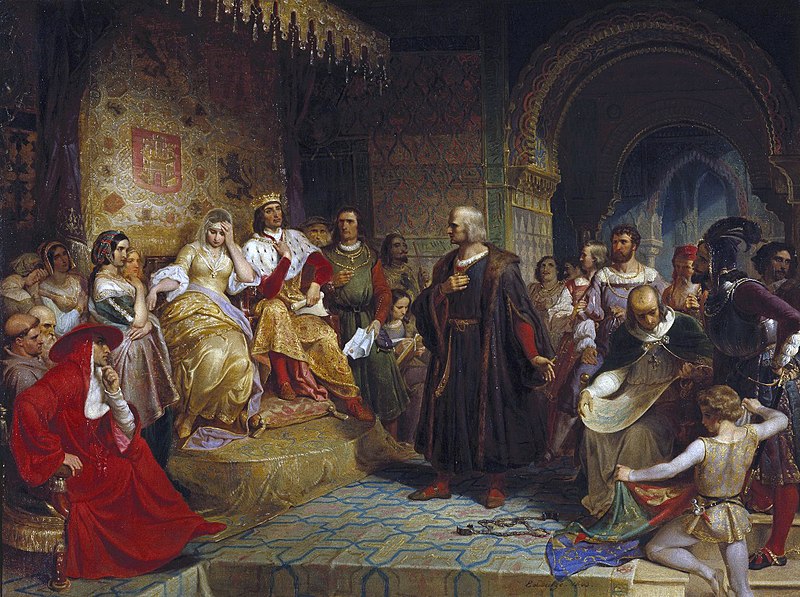
Although they were close to broke from the Reconquista, Isabella and Ferdinand generously fulfilled every aspect of Columbus’ proposition. They were especially at ease with granting him all the financial benefits of any new lands he discovered because, frankly, they didn’t think he would come back.
Interestingly enough, Columbus’ brother had successfully obtained a meeting with Henry VII of England during this same time. Had Columbus not already committed to Spain and embarked under the English crown, who knows how differently history would’ve unfolded?
Nevertheless, Columbus sailed the ocean blue in 1492 and Spain won the New World sweepstakes. The rest is history. Sure, he thought that he was in India and his calculations were ultimately incorrect, but his persistence just proves that he knew one thing and that was that it was him that was supposed to set out into the unknown. It’s more than just an accidental discovery that we should be commemorating today; it’s an entire journey, and not just a nautical one, but an unrelentingly gritty conquest of self-achievement and conviction.
I was surprised that it had come upon us so quickly, and with very little notice as well. The University of Minnesota, along with the rest of the state, doesn’t even recognize it with a day off – perhaps their Scandinavian roots prefer to give Leif Ericson his transatlantic due. My Old World fanaticism always made this a pretty cool holiday in my mind. After all, he’s the only non-American to have a day of observance in the US.
There’s a lot that can be said about this guy so I won’t sit here and provide an entire account of Columbus’ accomplishments – that’s what specials on the History Channel are for. Instead, before this Genoese navigator discovered a few Caribbean islands and led to the eventual exploration (and exploitation) of the continental Americas, he needed support. Both financially and authoritatively, Columbus had a bit of an uphill climb before he could hit the seas.
Contrary to popular belief, it was pretty common knowledge that the Earth was spherical and not flat prior to 1492. Europeans and Asians agreed on this fact and believed that there was nothing more than vast ocean between the Canary Islands and Japan, yet it was a voyage much too long for any ship of the time. Where Columbus made some waves was in claiming that the distance the Occident and the Orient was not as great as maritime experts had assessed. Through extensive calculations, Columbus tried to prove that there was a feasible crossing. The problem was no one was on board with his proposal.
In 1485, Columbus went to Portugal to present his plan to John II, figuring that the western most country in Europe would be most interested. He asked the King for a list of conditions such as three sturdy ships, the title of “Great Admiral of the Ocean”, governor of any lands he discovers, and ten percent of all revenue of those lands. The Portuguese advisors weren’t buying it. Columbus came back three years later, but John II wasn’t too attracted by his idea anymore since Portugal had gained control of the southern tip of Africa and now had a more secure trade route to Asia.
Columbus went back to his native Genoa to try his luck but to no avail. The Veneitians wasn’t digging it either. Then, in 1486, Isabella I of Castile in Spain granted him an audience but her advisors felt the same way as the Portuguese did; Columbus’ estimations were just too short for comfort. They knew that he was on to something though, because they gave him all kinds of provisions to keep them in his favor. After conquering the final Moorish stronghold in the Iberian Peninsula in 1492, Isabella and her husband, Ferdinand II of Aragon, received him once again.
The Spanish monarchs turned him down for a second time and Columbus was devastated. Ferdinand suddenly had a change of heart and sent the royal guard to find Columbus before he headed out of Granada. Columbus was found “leaving town by mule in despair”, only to learn he would be depart from the known world on vehicle much, much larger.
Although they were close to broke from the Reconquista, Isabella and Ferdinand generously fulfilled every aspect of Columbus’ proposition. They were especially at ease with granting him all the financial benefits of any new lands he discovered because, frankly, they didn’t think he would come back.
Interestingly enough, Columbus’ brother had successfully obtained a meeting with Henry VII of England during this same time. Had Columbus not already committed to Spain and embarked under the English crown, who knows how differently history would’ve unfolded?
Nevertheless, Columbus sailed the ocean blue in 1492 and Spain won the New World sweepstakes. The rest is history. Sure, he thought that he was in India and his calculations were ultimately incorrect, but his persistence just proves that he knew one thing and that was that it was him that was supposed to set out into the unknown. It’s more than just an accidental discovery that we should be commemorating today; it’s an entire journey, and not just a nautical one, but an unrelentingly gritty conquest of self-achievement and conviction.
Friday, October 9, 2009
Would you like Fries with that Masterpiece?

Well, it happened. They did it. There’s no turning back. In its never-ending conquest to spread its golden arches and hardly identifiable meats across the globe, McDonald’s can now be found in the very last place that I ever expected to find it. No, not the cafeteria in PETA’s headquarters. Instead, it can be found in a place that used to house royalty more revered than the Burger King himself and now serves as the world’s greatest art collection: the Louvre.
That’s right. The very building that displays giant statues as old as civilization itself will have to move over for the latest Happy Meal figurines.
When it comes to this consumer-driven economy that we live in, perhaps I’m nothing more than a romantic idealist yearning for a time when ingenious and inspired individuals crafted these compositions with little more than passion and originality. The illusion and appreciation of the starving artist is kind of hard to maintain with the aroma of, as John Travolta explained, a Royale with cheese drifting through the museum.
One of my most treasured memories from my entire European experience was when I went to Paris and spendt an entire day in the Louvre. From open to close, I admired the product of brilliant minds and unequaled skill. I tried to envision myself aside da Vinci, Rigaud, and Rembrandt as they painted these timeless works. Now I fear that I will unavoidably wonder what Delacroix, Vermeer, and Géricault wanted me to order for them as I hear this phrase uttered over and over again.
What’s next? Concessions in the Coliseum? A Pizza Hut every ten miles along the Great Wall of China? A Jamba Juice atop Machu Picchu? After the fast-food industry’s most recent travesty against man, I can’t dismiss the possibility of any of these.
Sure, the Louvre is the world’s most visited museum and France is McDonald’s second biggest market behind (obviously) the US so the financial matters motivating it make sense, but the decision comes in poorer tastes than their menu items. The Louvre is home to timeless artwork that is reflective of our history and past societies more than anything else that has survived to this day – let’s not make McDonald’s this era’s contribution.
That’s right. The very building that displays giant statues as old as civilization itself will have to move over for the latest Happy Meal figurines.
When it comes to this consumer-driven economy that we live in, perhaps I’m nothing more than a romantic idealist yearning for a time when ingenious and inspired individuals crafted these compositions with little more than passion and originality. The illusion and appreciation of the starving artist is kind of hard to maintain with the aroma of, as John Travolta explained, a Royale with cheese drifting through the museum.
One of my most treasured memories from my entire European experience was when I went to Paris and spendt an entire day in the Louvre. From open to close, I admired the product of brilliant minds and unequaled skill. I tried to envision myself aside da Vinci, Rigaud, and Rembrandt as they painted these timeless works. Now I fear that I will unavoidably wonder what Delacroix, Vermeer, and Géricault wanted me to order for them as I hear this phrase uttered over and over again.
What’s next? Concessions in the Coliseum? A Pizza Hut every ten miles along the Great Wall of China? A Jamba Juice atop Machu Picchu? After the fast-food industry’s most recent travesty against man, I can’t dismiss the possibility of any of these.
Sure, the Louvre is the world’s most visited museum and France is McDonald’s second biggest market behind (obviously) the US so the financial matters motivating it make sense, but the decision comes in poorer tastes than their menu items. The Louvre is home to timeless artwork that is reflective of our history and past societies more than anything else that has survived to this day – let’s not make McDonald’s this era’s contribution.
Wednesday, October 7, 2009
A Brief Look of Anne Frank on Film
Sadly, history is full of episodes of extreme genocide and what makes these episodes even more tragic is that it is often the names of the individuals responsible for these horrific acts that are remembered most rather than the victims themselves. Unfortunately, there have been very few exceptions to this but, out of those few, perhaps none is more beloved than a young girl and her diary.
Although Anne Frank spent the better part of her life in hiding and detention, her diary has withstood the test of time and terror to reach millions worldwide. Her wholesome and heartening chronicle has served as insight of not just the lives that the confined used to lead, but the lives that they wished to lead again.
This video recording, which was posted by the Anne Frank Museum in Amsterdam earlier this week, displays the only known footage of Frank. Leaning out her window in both excitement and curiosity, it provides, as a wise man put it, “a touching look at a little girl who helped put a real face on victims of Hitler’s Germany through her own private thoughts.”
For more information, click here.
Although Anne Frank spent the better part of her life in hiding and detention, her diary has withstood the test of time and terror to reach millions worldwide. Her wholesome and heartening chronicle has served as insight of not just the lives that the confined used to lead, but the lives that they wished to lead again.
This video recording, which was posted by the Anne Frank Museum in Amsterdam earlier this week, displays the only known footage of Frank. Leaning out her window in both excitement and curiosity, it provides, as a wise man put it, “a touching look at a little girl who helped put a real face on victims of Hitler’s Germany through her own private thoughts.”
For more information, click here.
Sunday, October 4, 2009
"Away We Go" - Here We Come
 There seems to be a certain genre of film out there that goes without major publicity and mainstream praise, but everyone who sees one of those movies has nothing but pleasant things to say about them. It’s not the kind with A-list actors, awesome effects, or epic content – it’s simple and unadorned, yet you’re absorbed by what unfolds on screen and inescapably touched. It’s my favorite kind and Away We Go is the latest one of those that I’ve seen.
Simply put, Away We Go is the story of Burt (John Krasinski) and Verona (Maya Rudolph), an undyingly unmarried couple expecting their first child, searching for the perfect place to start a family. Deciding to check out locations in which they already have relatives or friends living, their journey takes them to Phoenix, Tucson, Madison, Montreal, and Miami. During their quest, Burt and Verona witness, experience, and learn a variety of parenting philosophies and what it truly means to be a family. Appearances by Catherine O’Hara, Jeff Daniels, Allison Janney, Jim Gaffigan, Maggie Gyllenhaal, and Paul Schneider provide laughter, shock, hope, and dismay.
My favorite quote when it comes to filmmaking came from Jack Lemmon when he said, “It’s hard enough to write a good drama, it’s much harder to write a good comedy, and it’s hardest of all to write a drama with comedy. Which is what life is.” Director Sam Mendes, who you may know from American Beauty and Road to Perdition, and writers Dave Eggers and Vendela Vida (who are married, by the way) were aware of that challenge and managed to orchestrate this odyssey superbly. Each city is its own distinct chapter for Burt and Verona as they encounter new adventures at each stay. These aren’t farfetched or clichéd adventures though; they’re unique in their own little way.
Away We Go almost has a neorealist tone to it in that we’re watching the story of someone we could just as easily walk by on the street. Nothing flashy, nothing gaudy – it’s just the story of an average couple. For an hour and half, you’re experiencing what Burt and Verona are experiencing as if you were along for the ride and, although the movie has an ending, their story doesn’t seem to end. Like life, that was just one episode of many and you can relate to that sentiment of “What’s next?” with uplifting wonder.
So is Away We Go a romance? Comedy? Drama? It’s hard to categorize and perhaps that’s why these types of movies resonate with us so deeply. After all, how can you put a tag on what your life is? You can’t, you can only enjoy the drive and take away what you can from each stop. Away We Go reminds us of that and embodies it wonderfully.
Saturday, October 3, 2009
Axe-idently a Fan
In a game bigger than the man it’s named after, Gopher and Badger fans gathered at the Bank for the 61st annual game for Paul Bunyan’s Axe. Minnesotans were claiming since they had already snatched Favre away from Wisconsin, it was the axe’s turn to come to the Twin Cities. In response, Sconnies smugly reminded them that the axe has called Madison home for five consecutive years. Maroon and gold covered the stadium while pinches of cardinal red and white could be seen here and there.
Residents of these northern states had looked forward to this match-up like the first signs of spring after their typically long winters and there I was - two rainy hours before kick-off for the most played rivalry in Division I-A, and I didn’t care.
I was trying. Believe me, I was really trying to get into it. Frankly though, I was struggling to get riled up for an event that I had very little emotional investment in. The sight of a red, italicized “W” didn’t stir up anger. Nor was I the slightest bit repulsed by the presence of Bucky Badger; if anything, I imagined him and Goldy Gopher being good friends on some show on Nickelodeon. Truthfully, I didn’t even know Wisconsin mattered enough to actually emote hatred. Yet, amidst coarse words, flying objects, and a forest of middle fingers, I was expected to replicate this sentiment.
As well as being the first Big Ten game to take place at TCF Bank Stadium, it was also the first instant classic game to be held there. In the first quarter both team’s stars, Badger RB John Clay and Gopher WR Eric Decker (who will being getting a feature in this blog in the near future – stay tuned), showed why they’re the go-to players by each scoring touchdowns. After trading field goals right before halftime, Minnesota went into the locker room with a 13-10 lead.
Here we go, Gophers! Let’s keep this up in the second half, I suddenly found myself thinking loudly. And was I high-fiving enthusiastically after a first down? Not to mention, I found the success of our card stunt we had just performed as a student section thoroughly rewarding. The spirits of both my fellow alums and a certain bottle were starting to have an effect on me. Could I actually be getting in to this? Did I really just say I would rush the field if we won?
I was getting into it, and at the perfect time. As momentum went back and forth like a two-man saw cutting down pine trees, the Gophers and Badgers gave 50,000+ of their closest fans a ride on one heck of an emotional roller coast. The cold rain and gusty elements were an afterthought, even as they caused game-changing turnovers for both teams. There was perhaps none more thrilling though than Minnesota cornerback Marcus Sherels’ 88-yard fumble return to bring his team with three in the final minutes. Ultimately, we couldn’t pull it out and lost 31-28; Clay, his 184-yard rushing performance, and his teammates hoisted the axe in victory for the sixth time in a row.
The Badgers earned the win and I made the point to congratulate their fans after the game – but that doesn’t mean that I was happy about it. In just a few hours, I went from an indifferent spectator to a passionate fan. Well, maybe not passionate just yet, but I could still get there. It’s not often that I invest myself so wholeheartedly into an interest, let alone a football game, so even this slight disappointment was a sensation unfamiliar to me. To be sharing it with a whole mass of people was another unique feeling for me, one that seemed to unify us while in defeat. Personally, it was the most fulfilling disappointment I had experienced in a long time and an important step towards Gopher induction. It may have not been a maroon and gold painted axe, but I’m glad I walked out with something including those colors: Minnesota pride.
Residents of these northern states had looked forward to this match-up like the first signs of spring after their typically long winters and there I was - two rainy hours before kick-off for the most played rivalry in Division I-A, and I didn’t care.
I was trying. Believe me, I was really trying to get into it. Frankly though, I was struggling to get riled up for an event that I had very little emotional investment in. The sight of a red, italicized “W” didn’t stir up anger. Nor was I the slightest bit repulsed by the presence of Bucky Badger; if anything, I imagined him and Goldy Gopher being good friends on some show on Nickelodeon. Truthfully, I didn’t even know Wisconsin mattered enough to actually emote hatred. Yet, amidst coarse words, flying objects, and a forest of middle fingers, I was expected to replicate this sentiment.
As well as being the first Big Ten game to take place at TCF Bank Stadium, it was also the first instant classic game to be held there. In the first quarter both team’s stars, Badger RB John Clay and Gopher WR Eric Decker (who will being getting a feature in this blog in the near future – stay tuned), showed why they’re the go-to players by each scoring touchdowns. After trading field goals right before halftime, Minnesota went into the locker room with a 13-10 lead.
Here we go, Gophers! Let’s keep this up in the second half, I suddenly found myself thinking loudly. And was I high-fiving enthusiastically after a first down? Not to mention, I found the success of our card stunt we had just performed as a student section thoroughly rewarding. The spirits of both my fellow alums and a certain bottle were starting to have an effect on me. Could I actually be getting in to this? Did I really just say I would rush the field if we won?
I was getting into it, and at the perfect time. As momentum went back and forth like a two-man saw cutting down pine trees, the Gophers and Badgers gave 50,000+ of their closest fans a ride on one heck of an emotional roller coast. The cold rain and gusty elements were an afterthought, even as they caused game-changing turnovers for both teams. There was perhaps none more thrilling though than Minnesota cornerback Marcus Sherels’ 88-yard fumble return to bring his team with three in the final minutes. Ultimately, we couldn’t pull it out and lost 31-28; Clay, his 184-yard rushing performance, and his teammates hoisted the axe in victory for the sixth time in a row.
The Badgers earned the win and I made the point to congratulate their fans after the game – but that doesn’t mean that I was happy about it. In just a few hours, I went from an indifferent spectator to a passionate fan. Well, maybe not passionate just yet, but I could still get there. It’s not often that I invest myself so wholeheartedly into an interest, let alone a football game, so even this slight disappointment was a sensation unfamiliar to me. To be sharing it with a whole mass of people was another unique feeling for me, one that seemed to unify us while in defeat. Personally, it was the most fulfilling disappointment I had experienced in a long time and an important step towards Gopher induction. It may have not been a maroon and gold painted axe, but I’m glad I walked out with something including those colors: Minnesota pride.
Thursday, October 1, 2009
Uma Cidade Maravilhosa para 2016
 With Barack and Michelle, Oprah, His Royal Airness, and other prominent Chicagoans campaigning to get the 2016 Olympics in their city, it’s pretty easy to get patriotically riled up. Frankly, I can’t think of any other city in the world that would have such impressive ambassadors. Let’s not forget though that there are three other cities vying to get the attention of the IOC as well. Along with the Windy City, there’s Madrid, Rio de Janeiro, and Tokyo that are in the running as the final resting place for the torch in the summer of 2016. There’s no doubt that all four of these major metropolises are worthy of consideration, but I think that there’s one that is most deserving.
At the risk of becoming more hated than Steve Bartman, I’m not endorsing Chicago. Now I don’t want to be labeled an expatriate and forever banned from enjoying deep-dish pizzas for these sentiments. After all, if the Olympics are to be held in Second City, the Twin Cities would serve as a satellite location for some sports, including the University of Minnesota’s brand new stadium just a few blocks away, so I would have something to gain from it. I would also like to clarify that I’m not about to advocate for my beloved Spain either. As for Tokyo, last year’s Games were held just across the Yellow Sea in Beijing so Asia just got its turn.
Rio de Janeiro, you’re my pick.
Okay, okay, so I realize that it scored the lowest on the IOC’s evaluations last year. I can’t argue that it’s the safest and most apt candidate city. It’s going to take some work and understanding from other countries as Brazil prepares itself over the next seven years. It’s the principle of what the Olympic Games stand for that earns Rio my vote.
This event is meant to be a global coming-together of athletes proudly representing their country once every four years. Every nation gets an opportunity to display what its most talented citizens can do on the field, court, track, and in the pool. Although a medal would be an ideal outcome, above all, it’s about being an honorable symbol for your homeland that receives the most respect. Yet, despite the intentions of giving the whole world the chance to celebrate in its splendor and harmony, the location of the Olympics has been dominated by Europe and North America.
Excluding Beijing in 2008, eight out of the last ten Olympic Games have been held in First World, Western regions. That doesn’t include the upcoming 2012 Games in London. The ratio for the Winter Olympics is even more one-sided. Brazilian President Luiz Inácio Lula da Silva put it perfectly when he said, “It can’t be a European or an American Olympic Games. It has to be world Olympic Games.” It wasn’t until the XVII (or seventeenth) Olympiad that a non-Western country hosted it when Tokyo did in 1964, sixty-eight years after the inception of the Games. It would take until the summer of 1988 for Asia got another shot when the IOC selected Seoul. There’s no denying that there’s Occidental favoritism when it comes to the host cities, and we haven’t even touched where all the IOC presidents happen to be from.
For those of you who think our Eastern neighbors are getting gypped, don’t look to Central and South America for sympathy. The only Olympic Games to take place south of Los Angeles on our side of the Atlantic was when Mexico City was given the spotlight in 1968. If Rio doesn’t get it, then Latin America will go over half a century without seeing the Games come to them. And you can’t say that they haven’t tried: Buenos Aires has thrown its hat into the ring multiple times.
If Carnaval, Amazon wildlife, and Victoria’s Secret models aren’t enough to attract you to Brazil in 2016, then here’s what should. If we’re going to keep promoting the Olympics as a manifestation of global unity and encourage fairness and integrity amongst our athletes, the IOC should apply that philosophy to its host city selections. How unified and fair is it when only those in the G8 and their closest friends get a chance to put their focal points on exhibition?
As I mentioned earlier, I’m well aware that Brazil is a Third World country and granting them the 2016 Games presents inherent risks. It’s easy to look down our noses at them from above the equator, but don’t you think its time we give Central and South America a break and let them have this chance? Sure, they may not be as developed as us, but they never will be if we continue to propel ourselves and block them out. Like when it comes to dealing with kids from the inner city, they’re not going to believe in themselves if no one else believes in them. By being considered a legitimate equal and trusting them with this responsibility, these nations have a chance to better themselves internally and their image externally. A wise man once told me that “Brazil is the country of the future, and always will be,” referring to its struggle to get over the hump towards becoming a developed nation. Give it a push, IOC. And believe me, it would mean a lot to residents of Rio, or Cariocas; Pelé himself said getting the Games to Brazil would “be similar to winning his fourth World Cup.”
When all eyes turn to Copenhagen tomorrow and Jacques Rogge announces which city the IOC has picked to host the Games of XXXI Olympiad, support and encourage the victors but also reflect on what it means. Perhaps the Committee decides to play it safe in the best interest of the entertainment of the event or maybe, just maybe, they humble themselves and let someone else into the club and give him a chance to prove himself and capture the gold. As da Silva put it, “I believe the Olympic Games are not only a privilege for rich countries.” I'm with you there, Sr. Presidente.
Rio de Janeiro para 2016!
Wednesday, September 30, 2009
Random Entry #1
Don't worry - I'm okay. I know I forgot to post something yesterday and that all of you were in dire need of an update, but other commitments beckoned. I'll provide you with a few highlights of the past two days and other things that I thought about.
Coin-flipping Champion - In a tournament of sixty-four students, I came out victorious in the lost art of flipping a coin. Do NFL teams sign coin-specialist? If so, get me my agent. My professor in my Human Evolution lecture was trying to demonstrate natural selection by using the ability to predict heads or tails as a trait - or something like that, I don't really know. The point is that I can claim the crown and there are 250 students who witnessed it. Tails never fails, baby!
Shelby-ville Invasion - After never having met someone with the name "Shelby" in my twenty years of existence, I have met four since the beginning of the semester. Am I alone in considering that name to be unique or is it more common than I realized? Is it short for something? On the plus side though, they've all been girls so at least I'm talking to females long enough to learn their name.
No Fall at All - Minnesota's most recognized commodity, the cold, is so popular that locals decided to skip an entire season in order to get it. It suddenly went from shorts and t-shirts in 80 degree weather to scrambling for mittens and long underwear in temperatures that were half that in the span of two days- and it's not even October yet! I have no idea why this state is in such a rush to get to winter, but it looks like it's here to stay with no signs of warmer weather in the next week.
Hogging All the Money - A random thought: what zoological considerations were taken into account when creating the piggy bank? It just seems like a interesting animal to pick to safeguard your hard-earned riches. Although, the threat of swine flu might protect your coinage from petty, hypochondriac thieves.
That's all I got.
Coin-flipping Champion - In a tournament of sixty-four students, I came out victorious in the lost art of flipping a coin. Do NFL teams sign coin-specialist? If so, get me my agent. My professor in my Human Evolution lecture was trying to demonstrate natural selection by using the ability to predict heads or tails as a trait - or something like that, I don't really know. The point is that I can claim the crown and there are 250 students who witnessed it. Tails never fails, baby!
Shelby-ville Invasion - After never having met someone with the name "Shelby" in my twenty years of existence, I have met four since the beginning of the semester. Am I alone in considering that name to be unique or is it more common than I realized? Is it short for something? On the plus side though, they've all been girls so at least I'm talking to females long enough to learn their name.
No Fall at All - Minnesota's most recognized commodity, the cold, is so popular that locals decided to skip an entire season in order to get it. It suddenly went from shorts and t-shirts in 80 degree weather to scrambling for mittens and long underwear in temperatures that were half that in the span of two days- and it's not even October yet! I have no idea why this state is in such a rush to get to winter, but it looks like it's here to stay with no signs of warmer weather in the next week.
Hogging All the Money - A random thought: what zoological considerations were taken into account when creating the piggy bank? It just seems like a interesting animal to pick to safeguard your hard-earned riches. Although, the threat of swine flu might protect your coinage from petty, hypochondriac thieves.
That's all I got.
Monday, September 28, 2009
FOTOS IMPOSIBLES
Look at me go - updates for four consecutive days.
Thank my cousin Jose for this post - it's a collection of some cool photos by a guy named Erik Johannson. The music is pretty sweet too. Enjoy.
If it doesn't work, here's the link: http://www.tu.tv/videos/fotos-imposibles.

Thank my cousin Jose for this post - it's a collection of some cool photos by a guy named Erik Johannson. The music is pretty sweet too. Enjoy.
If it doesn't work, here's the link: http://www.tu.tv/videos/fotos-imposibles.
Sunday, September 27, 2009
Action Fred Jackson
After outscoring fantasy stud Adrian Peterson for the second week in a row and with the risk of losing this glimpse of limelight once Marshawn “Let Me See Yo’ Grill” Lynch returns next week, I’ve decided to do profile on Fred Jackson. No, not the saxophonist but the Buffalo Bills running back.
Born in the less regarded half of the Dallas-Fort Worth metroplex, Jackson went from Lamar High School to Coe College. “Where’s Coe College?” those of you who don’t devotedly follow the Iowa Intercollegiate Athletic Conference (IIAC) may ask. Well, it’s right in Cedar Rapids and I think it would be safe to say that Freddy was the best football player in town during his time there.
In his final year of college, Jackson tore it up for the Kohawks. He rushed for 1,702 yards and 29 touchdowns in just ten games (that’s 170.2 yards and nearly three TDs per). Needless to say, he turned some heads in not just in the IIAC but in all of D-III, earning himself his second conference MVP and a spot on five All-American teams.
Unfortunately, beating up on the University of Dubuque and Wartburg wasn’t enough to get any love from NFL scouts and Jackson went undrafted in 2003. It’s a good thing that he grew so fond of Iowa because he was then signed by the Sioux City Bandits of the United Indoor Football League (UIF). He was named co-MVP at the end of the 2005 season after a 1,770 yard and 41 touchdown campaign. Oh, and by the way, he was making about $100 per game.
Following his impressive career with the Bandits (who would go on to retire his number), Jackson rose in the ranks of legitimate football leagues and made his way to NFL Europe to play for the Rhein Fire. While in Düsseldorf, he continued his habit of leading his team in rushing and kept the Fire competitive as they finished third overall in the league.

Someone in the Bills’ front office must’ve been a big fan of either the Kohawks, Bandits, or Fire because Jackson was invited to their training camp in 2006. He stuck around on the practice squad that season, and made the active roster the following year. It didn’t take long for Jackson to get Buffalo fans to bear the arctic elements and come watch him. During that season, against none other than the Redskins, Jackson became the first Division III running back to start an NFL game in seven years – and he did pretty well rushing for 82 yards and adding 69 more through the air with four receptions in a victorious effort.
That was the opportunity Jackson needed to let the Bills' coaching staff know that he was worthy of consistent playing time. He continued to play well when he got the chance and in December of that season, Lynch and Jackson became the first duo of Buffalo running backs to each rush for 100-yards (Jackson had more, by the way) in a game.
Fastforwarding past an ordinary season as a backup in 2008, Jackson is now forcing Dick Jauron to consider reshuffling his depth chart at the halfback position. With Lynch sitting out the first three games due to suspension, Jackson has been the starter over Xavier Oman - a man who can't help but see his initials any time he plays tic-tac-toe - with an average of 142 total yards per game, and led Buffalo in a near-upset over the Patriots in Week One. As well as helping the Bills out with his versatility out of the backfield as both a runner and receiver, he’s been a pleasant addition to my fantasy team after initially being overlooked.
Then again, it’s only appropriate that he's been overlooked yet again. You’ll get your due someday, Fred, you’ll get your due someday.
Born in the less regarded half of the Dallas-Fort Worth metroplex, Jackson went from Lamar High School to Coe College. “Where’s Coe College?” those of you who don’t devotedly follow the Iowa Intercollegiate Athletic Conference (IIAC) may ask. Well, it’s right in Cedar Rapids and I think it would be safe to say that Freddy was the best football player in town during his time there.
In his final year of college, Jackson tore it up for the Kohawks. He rushed for 1,702 yards and 29 touchdowns in just ten games (that’s 170.2 yards and nearly three TDs per). Needless to say, he turned some heads in not just in the IIAC but in all of D-III, earning himself his second conference MVP and a spot on five All-American teams.
Unfortunately, beating up on the University of Dubuque and Wartburg wasn’t enough to get any love from NFL scouts and Jackson went undrafted in 2003. It’s a good thing that he grew so fond of Iowa because he was then signed by the Sioux City Bandits of the United Indoor Football League (UIF). He was named co-MVP at the end of the 2005 season after a 1,770 yard and 41 touchdown campaign. Oh, and by the way, he was making about $100 per game.
Following his impressive career with the Bandits (who would go on to retire his number), Jackson rose in the ranks of legitimate football leagues and made his way to NFL Europe to play for the Rhein Fire. While in Düsseldorf, he continued his habit of leading his team in rushing and kept the Fire competitive as they finished third overall in the league.
Someone in the Bills’ front office must’ve been a big fan of either the Kohawks, Bandits, or Fire because Jackson was invited to their training camp in 2006. He stuck around on the practice squad that season, and made the active roster the following year. It didn’t take long for Jackson to get Buffalo fans to bear the arctic elements and come watch him. During that season, against none other than the Redskins, Jackson became the first Division III running back to start an NFL game in seven years – and he did pretty well rushing for 82 yards and adding 69 more through the air with four receptions in a victorious effort.
That was the opportunity Jackson needed to let the Bills' coaching staff know that he was worthy of consistent playing time. He continued to play well when he got the chance and in December of that season, Lynch and Jackson became the first duo of Buffalo running backs to each rush for 100-yards (Jackson had more, by the way) in a game.
Fastforwarding past an ordinary season as a backup in 2008, Jackson is now forcing Dick Jauron to consider reshuffling his depth chart at the halfback position. With Lynch sitting out the first three games due to suspension, Jackson has been the starter over Xavier Oman - a man who can't help but see his initials any time he plays tic-tac-toe - with an average of 142 total yards per game, and led Buffalo in a near-upset over the Patriots in Week One. As well as helping the Bills out with his versatility out of the backfield as both a runner and receiver, he’s been a pleasant addition to my fantasy team after initially being overlooked.
Then again, it’s only appropriate that he's been overlooked yet again. You’ll get your due someday, Fred, you’ll get your due someday.
Saturday, September 26, 2009
Partyin' Like It's 1299
For all you that went to Potomac from 4th grade to 6th, you may remember this. For those who didn't, you're going to think I'm odder than I already am.
Since about Thursday, and I don't know why, I've had this song stuck in my head:
It's an Olde English song that the English of old would sing for May Day to welcome in the summer; "Sumer Is Icumen In" means "Summer Has Come In". Hard to believe that the language we speak nowadays came from that. There are obviously some similarities, but they also differ significantly.
I won't bore you with too much history, but this is believed to be the first song that was sung in a round (channel your elementary school music classes to remember what that is) so that's cool. Listening to this on repeat earlier today made me realize something: if you lived during that period, there's a pretty good chance that was the only song you knew outside of what you heard in Church. Kinda strange to think about. When one's life consisted of tending to the fields and barely being cleaner than your livestock, I can't imagine exposure to a variety of music was commonplace.
Maybe this is the dork in me talking, but I guess the reason that I've enjoyed this short Wessex jingle so much is while I walk down the street, humming "Sumer Is Icumen In", I'd like to think I'm sharing that experience with some simple peasant who did the very same thing eight centuries ago. While I wander past a McDonald's, he might have gone by a butcher shop instead so clearly times have changed (although the meat may be equally as questionable), we still find a sense of comfort in the joy of a brief melody that reminds us of brighter days.
Not to mention, another reason I like it is because one of the line translates to "The bullock stirs, the stag farts." Sheer poetry.
Since about Thursday, and I don't know why, I've had this song stuck in my head:
It's an Olde English song that the English of old would sing for May Day to welcome in the summer; "Sumer Is Icumen In" means "Summer Has Come In". Hard to believe that the language we speak nowadays came from that. There are obviously some similarities, but they also differ significantly.
I won't bore you with too much history, but this is believed to be the first song that was sung in a round (channel your elementary school music classes to remember what that is) so that's cool. Listening to this on repeat earlier today made me realize something: if you lived during that period, there's a pretty good chance that was the only song you knew outside of what you heard in Church. Kinda strange to think about. When one's life consisted of tending to the fields and barely being cleaner than your livestock, I can't imagine exposure to a variety of music was commonplace.
Maybe this is the dork in me talking, but I guess the reason that I've enjoyed this short Wessex jingle so much is while I walk down the street, humming "Sumer Is Icumen In", I'd like to think I'm sharing that experience with some simple peasant who did the very same thing eight centuries ago. While I wander past a McDonald's, he might have gone by a butcher shop instead so clearly times have changed (although the meat may be equally as questionable), we still find a sense of comfort in the joy of a brief melody that reminds us of brighter days.
Not to mention, another reason I like it is because one of the line translates to "The bullock stirs, the stag farts." Sheer poetry.
Friday, September 25, 2009
Well, I caved in...
 So here it is – my very own blog. What am I doing here? I can’t believe it myself. This is a venue that I often mocked and ridiculed. One reserved for World of Warcraft junkies, independent music aficionados, those who do nothing but think up hypothetical MLB trades, and overly concerned toothpaste consumers.
Perhaps the primary cause for suddenly creating a blog would be yet another lonely Friday night. Well, I’m not entirely alone – Conan is here, and Craig’s on his way. The night is still relatively young though so I won’t put on my pajama pants just yet, but it’s not looking too promising. I thought college was supposed to be full of never-ending revelry and stealing your rival’s mascot. Where’s John Belushi when you need him? Heck, I’d even settle for Jim at this point.

So what can my audience (all four of you) expect from this blog? Not sure. Since many of you may not have the luxury of consistent access, I guess I’ll just provide you with what goes on in this little toy brain. I’ll cover anything from important world events to my daily affairs, from mainstream media to the soapbox preacher on campus, from esteemed historical figures to the Muppets, from deep meditation to a childish joke. The title of my blog “The Best of What’s Around” is not only my favorite Dave Matthews’ song, but I feel that it’s a fitting name for what will be an anthology of just about anything; whatever’s interesting to me at the time will make it on here.

How often will I update it? Whenever I can, but hopefully that’ll be a couple of times a week so check back fr
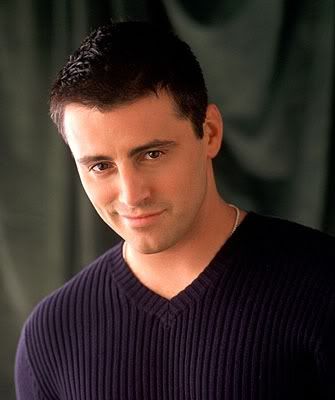 equently. Then again, I might give up on this project faster than Friends fans gave up on Joey. Probably not though since I foresee some more lonely Friday nights in the near future so thank the lack of a social life to this blog’s success.
Anyways, just as I finish off my third bowl of Lucky Charms of the night I think I’ll do the same with my first blog post. How it flew by. Stay tuned, spread the word, and feel free to make any suggestions/comments.
Oh, and take that, Kit.
Subscribe to:
Posts (Atom)